
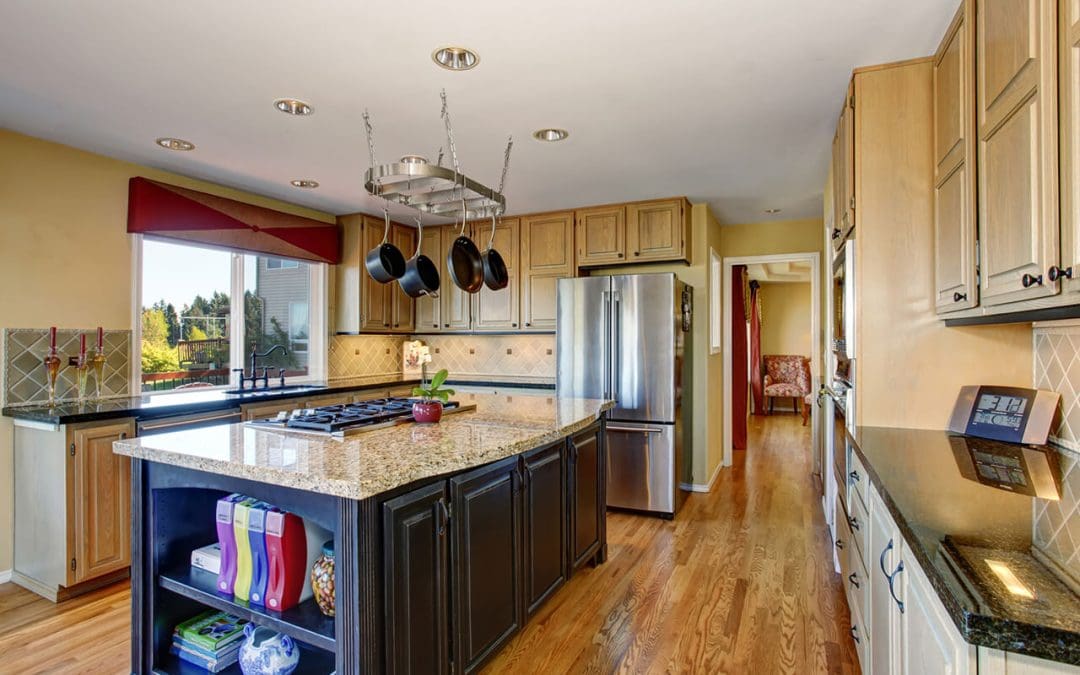
Kitchens accumulate cookware, appliances, pantry goods, gadgets, and the general overflow of daily life, and without intentional systems, that accumulation expands to fill every available surface and cabinet. The good news is that most kitchens, even small ones, have significantly more storage potential than their owners realize. Unlocking that kitchen storage potential is using the space that already exists more intelligently and adding storage in the places most homeowners overlook entirely.
The Kitchen Storage Principles That Make Any System Work
Before buying a single organizer, the most productive kitchen storage step is editing what’s in the kitchen. Duplicate tools, appliances used once in three years, and items that belong somewhere else entirely are all competing for space that could serve daily cooking. Editing before organizing is the sequence that produces lasting results. The second foundational principle is storing things where they’re first used rather than where they seem logically categorized. Coffee supplies near the coffee maker, cutting boards accessible at the prep area, baking supplies grouped near the oven, proximity-based kitchen storage reduces daily friction more than any organizer. The drawer across the kitchen from where you need it is functionally less useful than a hook right there, even if the drawer is more visually organized.
Cabinet and Drawer Storage Strategies
Cabinets represent the majority of kitchen storage space in most homes and are consistently underutilized through poor shelf placement and the tendency to store things wherever they first landed rather than where they make the most sense. Adjustable shelves are a feature of most modern cabinets that many homeowners never adjust. Setting shelf heights to match what’s actually stored can effectively add a shelf’s worth of usable capacity in a single cabinet. A cabinet storing cereal boxes and canned goods needs very different shelf spacing than one storing plates and bowls. Drawer organizers transform junk drawers into functional kitchen storage by giving every category a specific location. Quality dividers make retrieval significantly faster and eliminate the rummaging that makes disorganized drawers feel worse than they are. Cabinet doors are underused kitchen storage real estate. Mounted hooks or racks on the inside of cabinet doors hold measuring cups, pot lids, cleaning supplies under the sink, and spices near the stove without occupying any shelf space.
Pantry and Vertical Kitchen Storage Solutions
Pantries accumulate expired items, duplicate purchases made because something was forgotten at the back of a shelf, and packaging that takes up far more space than its contents. Decanting dry goods into uniform clear containers stacked efficiently on shelves resolves all three problems simultaneously and creates a kitchen storage system that’s easier to maintain and faster to inventory. Vertical space is the kitchen storage opportunity most consistently left unused. The backsplash area between the countertop and upper cabinets can accommodate a magnetic knife strip, mounted rails with hooks for frequently used utensils, or a small shelf for oils and spices. This moves the items used most frequently out of drawers and onto accessible display, freeing cabinet space for things that don’t need to be immediately at hand. Above the refrigerator, above upper cabinets where ceiling height allows, and the space between appliances and shelves above them are all kitchen storage locations worth evaluating for infrequently used items.
Frequently Asked Questions (FAQs)
What are the most effective kitchen storage upgrades for a small kitchen?
For small kitchens, the highest-impact kitchen storage upgrades add capacity without requiring construction. Magnetic knife strips free up a full drawer. Wall-mounted rails move utensils off the counter. Tiered shelf organizers in cabinets double the effective number of shelf levels. Under-shelf baskets add storage beneath existing shelves without modification. Combined, these can transform a small kitchen’s functional capacity without a contractor.
How should I organize a deep pantry so nothing gets lost at the back?
Lazy susans are the most effective solution for deep pantry shelves where items at the back become invisible. Each shelf gets full rotation that brings everything to the front without reaching or unstacking. Pull-out drawer systems eliminate the dead zone entirely. Clear containers for dry goods make inventory visible without removing anything from the shelf.
Is it worth investing in professional kitchen storage organization?
For straightforward challenges a well-researched DIY approach produces excellent results at a fraction of the cost. For a full pantry buildout, custom insert installation, or structurally challenging kitchens, a professional organizer or cabinet designer adds genuine value through their product knowledge and objective eye for what the space actually requires.
How do I keep kitchen storage organized after I set it up?
The systems most likely to stay organized require the least discipline, systems that work even on the busiest day. A hook is easier to maintain than a folded stack. An open bin is easier than a lidded container. Clear labels remove the decision-making that causes things to land wherever they fit. The one-in-one-out rule applied to kitchen tools prevents the re-accumulation that defeats most kitchen storage systems within a year.
What kitchen items should be stored on the counter versus in cabinets?
The counter should be reserved exclusively for items used daily. Everything else earns counter space only if using it is genuinely more convenient there than retrieving it from a cabinet. Appliances used weekly belong in an accessible cabinet; monthly or seasonal items belong in deeper storage.
Crossroads Home Inspections provides inspections to homebuyers and sellers in St. Louis and the surrounding area. Contact us to schedule our services.